
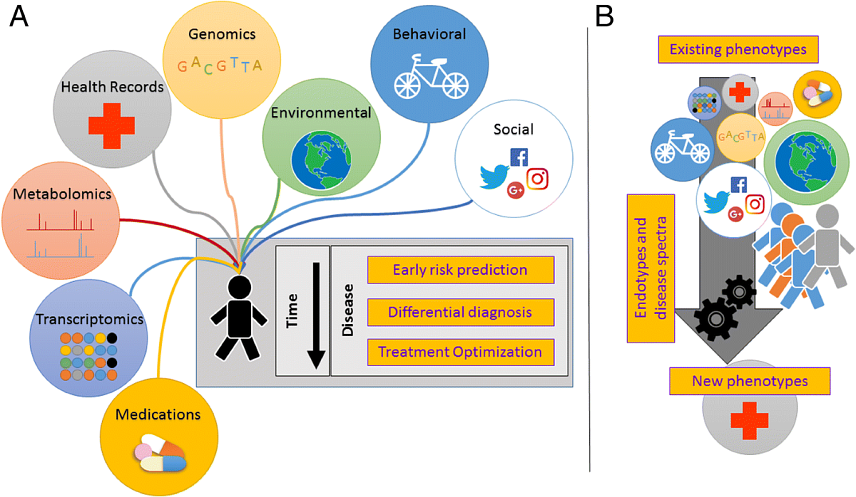
Imagine a future where your treatment is designed specifically for your genetic profile rather than a one-size-fits-all approach. Thanks to advances in bioinformatics, this vision is rapidly becoming reality. By combining biology, computer science, and data analysis, bioinformatics enables researchers and clinicians to transform complex genomic data into personalized healthcare solutions.
Modern sequencing technologies, such as Next-Generation Sequencing (NGS), generate enormous amounts of DNA data within hours. However, raw sequencing data alone cannot answer important clinical questions. Bioinformatics bridges this gap by processing, analyzing, and interpreting genomic information to identify disease-causing variants, predict treatment responses, and support clinical decision-making.
Several powerful bioinformatics tools make this process possible. FastQC is commonly used to assess the quality of sequencing data before analysis begins. BWA and Bowtie2 align millions of DNA reads to the human reference genome, while SAMtools manages and processes alignment files. To identify genetic variants, researchers frequently use the Genome Analysis Toolkit (GATK), one of the most widely adopted variant-calling pipelines in genomic research.
Once variants are detected, they must be interpreted. Annotation tools such as ANNOVAR and the Ensembl Variant Effect Predictor (VEP) help determine whether a mutation is associated with disease, affects protein function, or has clinical significance. For visualization, the Integrative Genomics Viewer (IGV) allows scientists to inspect genomic regions and validate sequencing results. Researchers also rely on databases such as ClinVar, dbSNP, and gnomAD to compare findings with previously reported genetic variants.
These tools are transforming many areas of medicine. In oncology, bioinformatics identifies mutations that guide targeted cancer therapies. In rare disease diagnostics, it helps uncover pathogenic variants responsible for inherited disorders. In pharmacogenomics, genomic analysis predicts how patients will respond to specific medications, enabling safer and more effective treatment choices.
As artificial intelligence becomes integrated with bioinformatics, the future of precision medicine looks even more promising. Machine learning algorithms are accelerating variant interpretation, discovering novel biomarkers, and improving disease prediction with unprecedented accuracy.
Bioinformatics is no longer just a research discipline—it is a cornerstone of modern healthcare. By turning billions of DNA sequences into clinically actionable insights, bioinformatics is making precision medicine more accurate, efficient, and accessible, bringing us closer to a future where every patient receives truly personalized care.
 If Humans Are Not Alone: How F...
 Astrobiology and Biosafety: Se...
 Scientific Foundations and App...
 The Personal and Legal Importa...
Copyright @ GeneSafety. Created By WebCenter